
Owning a home on the St. Croix River isn’t just a real estate transaction; it’s an acquisition of a federally protected landscape that demands a specialist’s eye for regulation and terrain. You’ve likely spent years dreaming of a legacy property where the water is your backyard and the valley’s natural beauty remains untouched. However, buying a waterfront home on the St. Croix River in 2026 requires more than a standard mortgage pre-approval. You’re entering a market governed by the National Park Service and strict local ordinances, such as the St. Croix County Lower St. Croix Riverway Overlay District Ordinance that took effect on March 3, 2026.
We understand that you want a property that balances recreational access with long-term value, but the path to a signature estate is often complicated by federal building restrictions and unique terrain challenges. This guide provides the expert local guidance you need to move forward with confidence. We’ll explore the critical differences between bluff-top views and direct beach access, explain the latest tax rates like the $2.59 mill rate in St. Croix County, and detail exactly what you can build under the current Superintendent’s Compendium. You’ll gain a clear roadmap for securing a high-value property in this prized territory.
Key Takeaways
- Differentiate between the luxury residential market of the Lower St. Croix and the rugged, recreational character of the Upper Riverway.
- Understand how federal “Slope and Bluffline” rules impact your ability to build or renovate near the water’s edge.
- Adopt a land-first mentality when buying a waterfront home on the St. Croix River to protect your investment from erosion and terrain challenges.
- Connect with specialized brokers who provide access to off-market listings and deep regional knowledge of the valley’s hidden gems.
Understanding the St. Croix River Waterfront Market
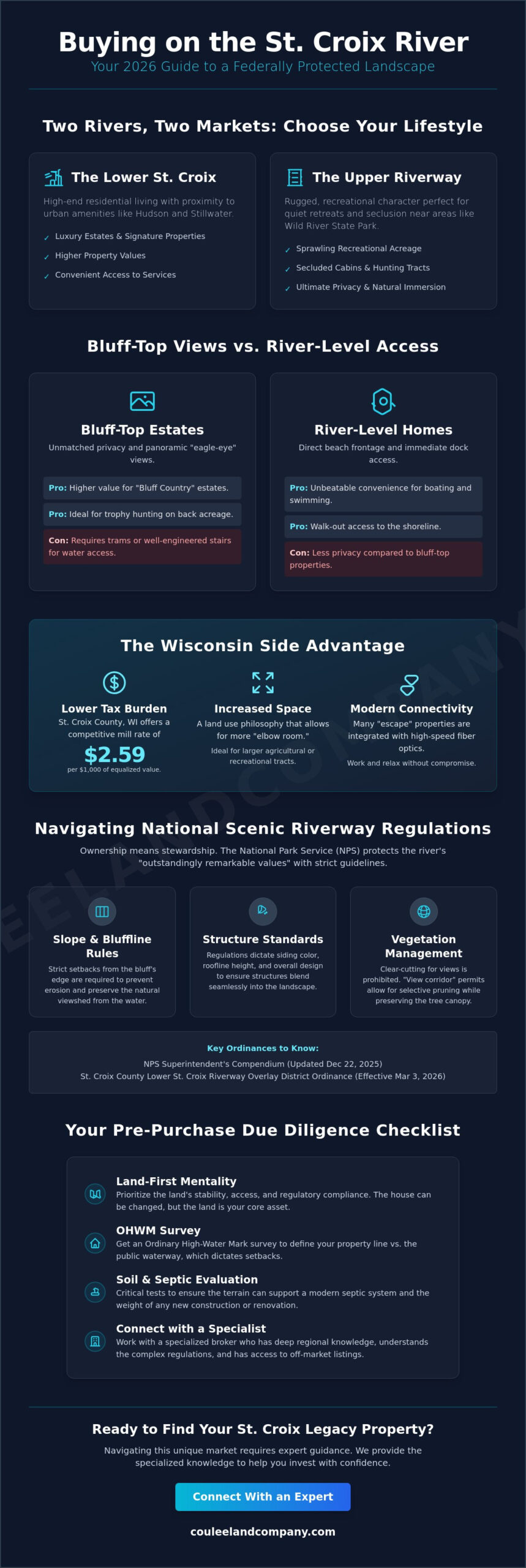
The St. Croix River market isn’t a monolith. It offers a diverse landscape of high-end residential estates, seasonal cabins, and sprawling recreational acreage. For those considering buying a waterfront home on the St. Croix River, the choice often comes down to the level of immersion you want in this federally protected corridor. The Lower St. Croix, stretching through Hudson and Stillwater, defines high-end residential living with proximity to urban amenities. In contrast, the Upper St. Croix near Wild River State Park attracts those seeking secluded hunting tracts and quiet retreats. This St. Croix River overview highlights the unique geography that shapes these distinct market segments.
To better understand the potential of riverfront living, watch this visual tour of a premier property:
Bluff-Top vs. River-Level: Which Lifestyle Fits You?
Choosing a site is a matter of priority. Bluff-top homes offer unmatched privacy and panoramic views where you can watch eagles soar at eye level. These properties often hold higher value for those seeking “Bluff Country” estates with trophy hunting potential on the back acreage. Conversely, lowland homes provide direct beach frontage and immediate dock access. Keep in mind that St. Croix lots are vertical by nature. The presence of a functional tram system or well-engineered stairs significantly impacts the resale value of waterfront properties in this region.
The Wisconsin Side Advantage
The 2026 market shows a distinct trend toward the Wisconsin side for buyers interested in buying a waterfront home on the St. Croix River for its lower tax burden and increased space. St. Croix County, WI, currently offers a competitive mill rate of $2.59 per $1,000 of equalized value, which is a decrease from the 2025 rate. This financial edge, combined with a land use philosophy that often allows for more elbow room, makes the Wisconsin side a magnet for those wanting larger agricultural or recreational tracts. Modern “escape” properties now demand high-speed connectivity, and many areas in the valley have successfully integrated fiber optics into these natural landscapes.
Navigating St. Croix National Scenic Riverway Regulations
Buying a waterfront home on the St. Croix River means becoming a steward of a federally managed corridor. The National Park Service (NPS) oversees this territory as a National Scenic Riverway, imposing standards that protect its “outstandingly remarkable values.” These National Scenic Riverway regulations are detailed in the Superintendent’s Compendium, which was updated on December 22, 2025. These rules dictate everything from the color of your siding to the height of your roofline to ensure structures blend into the natural landscape.
The “Slope and Bluffline” rules are particularly stringent. They require specific setbacks from the edge of a bluff to prevent erosion and preserve the viewshed for paddlers on the water. Vegetative management standards also prohibit clear-cutting trees for a better view. Instead, homeowners must follow “view corridor” permits that allow for selective pruning while maintaining a thick canopy. If you plan on installing a private dock or boat lift, you’ll need to navigate a specific permit process that respects riparian rights while limiting the density of structures along the shoreline.
Zoning Tiers: Small Town vs. Rural Scenic
The riverway is divided into management zones such as Urban, Small Town, and Rural Scenic. Each tier has different minimum lot sizes and frontage requirements. Many older cabins exist as “non-conforming uses,” meaning they were built before current standards. Expanding these footprints is often difficult and requires a deep understanding of local ordinances like the St. Croix County Lower St. Croix Riverway Overlay District Ordinance effective March 3, 2026.
Building and Renovation Hurdles
Before you commit to a purchase, your due diligence checklist must include several specialized steps. You’ll need an ordinary high-water mark (OHWM) survey to determine exactly where your property ends and the public waterway begins. Soil tests are equally critical to ensure the terrain can support modern septic systems or the weight of a new build. It’s vital to work with a land specialist broker Wisconsin who understands these DNR and NPS hurdles. If you have questions about a specific parcel, reach out to our team of waterfront property specialists to evaluate the land’s true potential.
Strategy for Buying a St. Croix River Home in 2026
Success in this market requires a land-first mentality. You have to evaluate the soil composition, the degree of the slope, and the stability of the shoreline before you fall in love with a gourmet kitchen. These physical attributes dictate the property’s true potential and long-term viability. Buying a waterfront home on the St. Croix River is a significant investment that involves active stewardship, including invasive species management and shoreline stabilization. Many of the most prestigious estates never reach the public MLS. You need an advocate who understands the valley’s nuances. Establishing a relationship with a local expert like Mike Law or Bryan Lemke gives you a distinct advantage in finding these hidden off-market gems.
In a landscape where the best properties rarely change hands, having an insider’s perspective is the only way to secure a truly signature estate. These experts understand the granular details of the riverway that a standard residential agent might overlook. They know which parcels offer the best protection from prevailing winds and which stretches of the river maintain the best water depth for your watercraft during late-season droughts.
Evaluating the ‘Total Package’ Property
The most valuable acquisitions often combine water access with high-quality hunting land or agricultural potential. This creates a multi-use legacy property that serves as both a private retreat and a sound financial asset. When evaluating these larger tracts, refer to our Country Homes 2026 Guide to understand the infrastructure requirements for rural living. You’ll need to verify the capacity of deep-well systems and ensure the property can support modern high-speed internet connectivity without compromising the natural aesthetic.
Closing the Deal on the River
Closing on a riverfront estate involves more than a standard home inspection. You must insist on specialized assessments, including dock integrity checks, shoreline erosion reports, and bluff stability certifications. These technical reviews protect your capital and ensure the land remains viable for future generations. Embracing the St. Croix Valley lifestyle means joining a culture of conservation and outdoor heritage. It’s about more than just owning a view; it’s about preserving a unique American landscape while securing your place within it.
Secure Your Legacy on the St. Croix
The St. Croix Riverway remains one of the most prestigious and protected landscapes in the American Midwest. Navigating the federal regulations and unique terrain of this valley requires more than a typical real estate agent. It demands a partner who understands the intricacies of bluff-line setbacks, vegetative management, and the nuances of the 2026 market. By prioritizing a land-first strategy and securing specialized inspections, you ensure that your investment is as stable as the limestone bluffs themselves.
Buying a waterfront home on the St. Croix River is an opportunity to own a piece of national heritage. Our team has specialized in Bluff Country since our inception, and we are proud to be endorsed by industry-leading land managers. We bring deep expertise in both recreational acreage and signature luxury homes to every transaction. We invite you to Explore Exclusive St. Croix Riverfront Listings and take the first step toward your riverway legacy. The valley is waiting for its next great steward, and we’re ready to guide you home with the diligence and expertise your investment deserves.
Common Questions About St. Croix Waterfront Property
Can I build a dock on any property on the St. Croix River?
No, dock installation isn’t guaranteed for every shoreline parcel. You must secure specific permits from the National Park Service and local zoning authorities. These agencies strictly regulate dock density to preserve the river’s natural flow and scenic character. Some management zones have tighter restrictions than others. Buying a waterfront home on the St. Croix River requires a thorough verification of these riparian rights before you finalize any purchase agreement.
What are the ‘Bluffline’ setback requirements for new construction?
Setback requirements are determined by the management zone but remain consistently strict across the riverway. The St. Croix County Lower St. Croix Riverway Overlay District Ordinance, which took effect March 3, 2026, outlines these specific distances. These rules prevent structures from encroaching on the bluff’s edge to maintain slope stability and visual screening. You’ll need a professional survey to identify the bluffline before drafting any construction or renovation plans.
Is the Wisconsin side of the St. Croix River cheaper than the Minnesota side?
Acquisition costs vary by location, but the ongoing cost of ownership is influenced by differing tax structures. St. Croix County, WI, has a 2026 mill rate of $2.59 per $1,000 of equalized value. In contrast, Washington County, MN, saw a preliminary levy increase of 6.9% for 2026. The Wisconsin side typically offers larger parcels and more recreational acreage, making it a favorite for those seeking agricultural or hunting potential alongside the water.
How do National Scenic Riverway rules affect my ability to cut trees for a view?
You’re prohibited from clear-cutting vegetation to create a view. National Scenic Riverway rules mandate a “screening” effect where trees hide homes from the river’s main channel. Homeowners can apply for view corridor permits to prune or remove specific trees within a limited area. This process allows for a managed sightline while protecting the canopy. Buying a waterfront home on the St. Croix River means adhering to these vegetative management standards to preserve the valley’s heritage.