
Owning a piece of the Driftless Area isn’t just about the view; it’s about securing a legacy in the heart of the world’s premier whitetail country. Finding the right buildable lots for sale western wisconsin requires more than just a map and a dream. You need to understand how the 300 foot elevation changes in Buffalo County, which has produced over 1,000 Boone and Crockett entries, impact your foundation and your hunting lanes. Most buyers recognize that a ridge-top cabin is the ultimate goal, yet they often feel paralyzed by the complex zoning codes and the risk of a failed perc test on a steep slope.
We agree that the process should be as rewarding as the first morning in a deer stand. This expert guide provides the technical roadmap you need to master Western Wisconsin’s unique terrain, ensuring your investment is physically accessible and legally sound. You’ll learn exactly how to evaluate soil types, interpret the 2024 local building ordinances, and verify utility access so you can build with absolute confidence in this prized territory.
Key Takeaways
- Learn how to distinguish between simple recreational acreage and a certified homesite in the unique, rugged terrain of the Driftless Area.
- Master the essential 5-step vetting process, including how to verify perc test results and secure legal access before you commit to a purchase.
- Discover the best regions for your investment, from the trophy whitetail ridges of Buffalo County to the buildable lots for sale western wisconsin offers near the Twin Cities.
- Navigate the competitive 2026 land market with expert insights on current pricing trends and the strategic advantage of cash offers.
- Leverage the “Hunter’s Realtor” advantage to identify properties that offer the perfect balance of building potential and world-class outdoor recreation.
What Defines ‘Buildable’ Lots in Western Wisconsin?
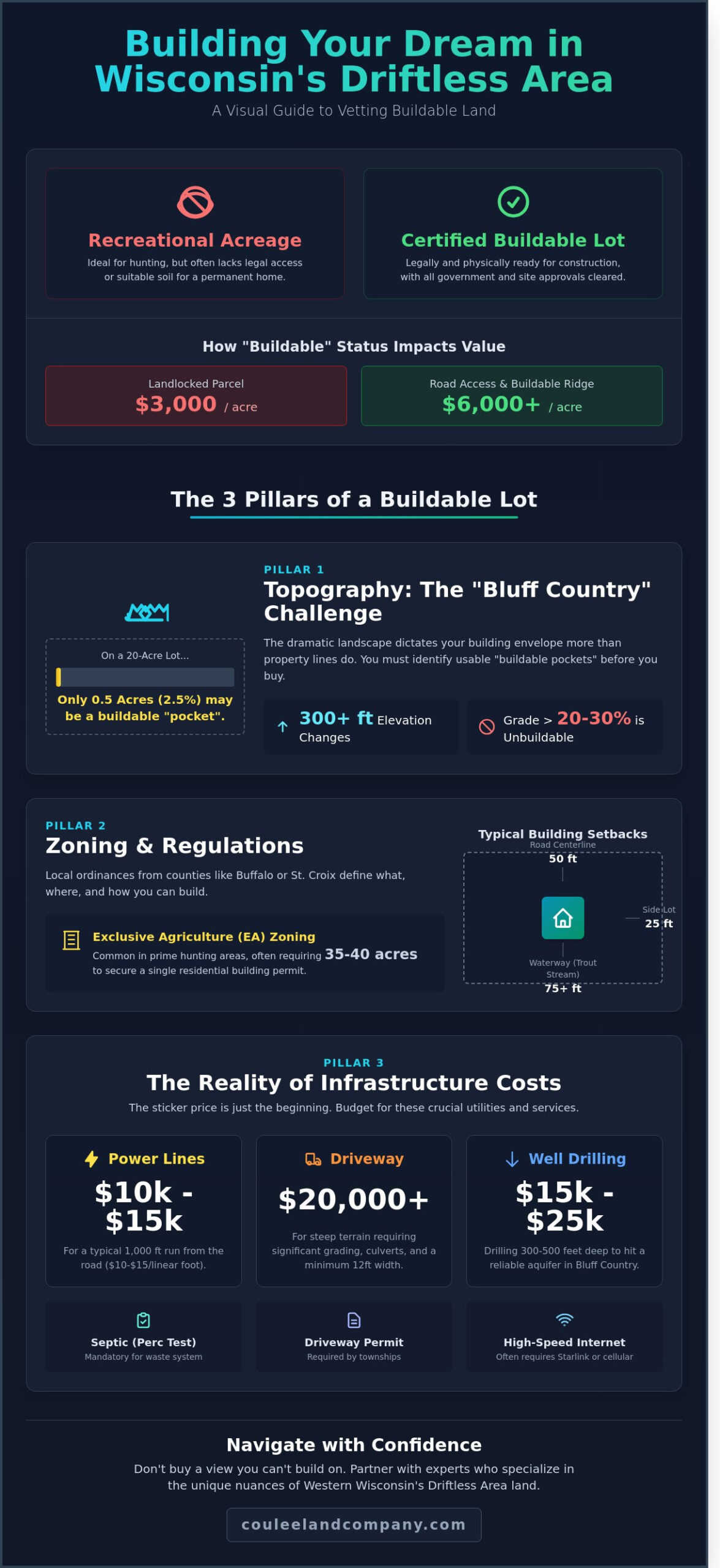
Buying land in the Driftless Area is a dream for many hunters and outdoor enthusiasts, but there is a massive difference between a 40-acre recreational tract and a certified buildable lot. A recreational property might be perfect for chasing trophy whitetails, yet it can lack the legal access or soil suitability required for a permanent structure. When you search for buildable lots for sale western wisconsin, you aren’t just looking for dirt. You’re looking for a property that has cleared the hurdles of local government approvals and physical site constraints. Property valuation in the Coulee Region relies heavily on legal road frontage; a landlocked parcel might sell for $3,000 per acre, while a lot with township road access and a buildable ridge can easily double that figure.
Topography in the “Bluff Country” dictates your building envelope more than property lines do. While a ridge top offers incredible views of the coulees, the Wisconsin Department of Natural Resources and local townships often enforce strict slope requirements. In many areas, you can’t build on a grade exceeding 20% or 30%. This means a 20-acre lot might only have a half-acre of truly usable space for a home and septic system. You have to identify these “buildable pockets” before signing a contract. Our team at Coulee Land Company specializes in identifying these nuances, ensuring you don’t buy a “buildable” lot that is actually restricted by vertical limestone cliffs or protected waterways.
To better understand the unique terrain and potential of these properties, watch this helpful video showcasing a Driftless Area parcel:
Zoning and Land Use Regulations
Understanding what land-use planning is becomes vital when you look at Buffalo or St. Croix counties. In Buffalo County, much of the prime hunting land is zoned as Exclusive Agriculture (EA). This zoning often carries a density requirement, such as a 1 per 35 or 1 per 40 rule. This means you need at least 35 or 40 acres to secure a single residential building permit. St. Croix County has different pressures, with residential zoning becoming more common as the Twin Cities metro expands. You must also account for setbacks; most townships require a home to sit at least 50 feet from the road centerline and 25 feet from side lot lines. If your lot borders a trout stream or a Class 1 waterway, shoreland zoning rules can push your buildable footprint 75 feet or more back from the ordinary high-water mark.
The Reality of Infrastructure Costs
The sticker price of buildable lots for sale western wisconsin is only the beginning of your investment. Bringing power to a remote bluff top is a major expense. Local cooperatives like Dairyland Power or Pierce Pepin often charge between $10 and $15 per linear foot to run underground lines. If your dream cabin site is 1,000 feet from the road, you’re looking at a $10,000 to $15,000 utility bill before you even pour a footing. Driveway construction is another hurdle. Most rural townships require a minimum 12-foot wide driving surface with a 14-foot vertical clearance to accommodate fire trucks and ambulances. In the steep terrain of the Driftless Area, installing a driveway that meets these safety codes can cost $20,000 or more if significant grading and culverts are needed. Finally, don’t assume every rural lot has high-speed internet. While providers like 24-7 & West Wisconsin Telcom are expanding fiber optics, many remote ridges still rely on Starlink or cellular boosters for modern connectivity.
- Soil Testing: A “perc test” is mandatory for a private onsite wastewater treatment system (POWTS).
- Well Depth: In Bluff Country, wells often need to go 300 to 500 feet deep to hit a reliable aquifer, costing $15,000 to $25,000.
- Driveway Permits: Townships require a “culvert permit” or “driveway permit” to ensure proper drainage and sightlines for road entry.
The 5-Step Checklist for Vetting Western Wisconsin Land
Finding buildable lots for sale western wisconsin requires a tactical approach similar to scouting a new ridge for a stand site. You aren’t just buying dirt; you’re investing in a foundation for a future home or cabin. The first step involves verifying the soil through a Perc Test. This evaluation determines if the land can handle a private onsite wastewater treatment system. In counties like Trempealeau or Pierce, rocky terrain often forces owners into expensive mound systems rather than traditional gravity-fed designs.
The second priority is confirming legal access. A hand-shake agreement with a neighbor doesn’t hold up in court, and you don’t want to be landlocked. Conduct a professional title search to identify any recorded easements or restrictions. You should also consult Wisconsin’s land use regulations to see if the parcel meets current subdivision standards and zoning requirements for your intended use.
Beyond the legalities, you must review the topography for erosion risks. A 30 percent grade looks beautiful for a walk-out basement, but it requires intensive, costly erosion control measures. Fourth, check neighboring well logs via the Wisconsin DNR database. If the neighbor’s well is 450 feet deep, your drilling budget needs to reflect that $15,000 reality. Finally, talk to the township clerk. Some areas have specific 2024 ordinances regarding building permit moratoriums or driveway length requirements for emergency vehicle access.
Soil Suitability and the Perc Test
Western Wisconsin’s landscape is famous for its “coulees,” but that same geography often features heavy clay or shallow bedrock. These conditions make traditional septic systems difficult to install. The 2024 cost for a standard septic system averages $8,500, while a pressurized mound system can easily climb to $19,500. Before you make an offer on buildable lots for sale western wisconsin, you must read the soil report for “limiting factors.” This includes identifying high water tables or bedrock within 36 inches of the surface, which dictates the type of system you’re legally required to install.
Topography and Excavation Planning
Bluff-side properties offer the best views in the state, but they require identifying “buildable benches.” These are natural, flat terraces on a hillside that provide stability. Driftless Area limestone is notoriously difficult to move. A standard foundation excavation might take two days, but if the operator hits a solid rock shelf, you’ll pay for a hydraulic breaker bar at $250 per hour. Proper drainage planning is also non-negotiable. You must ensure water flows away from the structure to prevent future foundation cracks or basement flooding, especially during the heavy spring thaws common in this region.
If you’re ready to find a property that has already been scouted for quality, you can view our current land listings to see tracts that meet these rigorous standards. Our team understands the nuances of the local soil and terrain because we live and hunt on this land ourselves.
Evaluating the Best Locations: From Buffalo County to St. Croix
Selecting the right acreage involves more than just finding a flat spot for a foundation. You’re choosing a lifestyle and a long-term investment in Wisconsin’s most iconic landscapes. When searching for buildable lots for sale western wisconsin, your choice of county dictates everything from your morning view to the quality of the deer herd in your backyard. Buffalo County remains the undisputed heavyweight for land buyers who prioritize hunting. It consistently leads the nation in Boone and Crockett record book entries, making it the premier destination for those who want to integrate a trophy whitetail strategy directly into their home site. You aren’t just buying a lot here; you’re securing a legacy in the heart of Bluff Country.
St. Croix and Pierce Counties offer a different strategic advantage. These areas provide a perfect middle ground for professionals who work in the Twin Cities but crave the rugged independence of rural life. A 35-minute commute from Hudson or Prescott allows you to transition from a corporate environment to a secluded ridge-top retreat before sunset. Meanwhile, Pepin and Trempealeau Counties represent the region’s best value. In 2024, land prices in these quieter river valleys often sit 12% to 18% lower than those in the booming St. Croix corridor. These areas are ideal for buyers seeking the same dramatic topography as Buffalo County without the premium price tag associated with national hunting fame.
Property tax considerations are a critical part of your 2026 financial planning. While rates vary by township, St. Croix County typically sees higher mill rates due to rapid infrastructure growth. In contrast, Buffalo and Pepin Counties often offer lower tax burdens, especially for lots that qualify for Managed Forest Law (MFL) programs or agricultural classifications. Expect average property tax rates in this region to range between $14.50 and $18.25 per $1,000 of assessed value, depending on your specific school district and municipal services.
Building for the View: Bluff-Top Considerations
The Mississippi River valley overlooks are the most coveted buildable lots for sale western wisconsin provides. These sites offer 20-mile views that change with the seasons, but they require expert planning. High-elevation homesites face intense wind exposure; gusts on a Buffalo County ridge can exceed 75 mph during summer storm fronts. Your architectural plans must prioritize weatherproofing and structural rigidity. All residential construction must strictly adhere to the Wisconsin Uniform Dwelling Code to ensure the home is rated for these specific environmental pressures. For a deeper look at specific ridge-top opportunities, see our Buffalo County community guide for area insights.
Waterfront and Recreational Synergy
Building near water adds a layer of complexity and beauty to your project. Whether you’re eyeing a lot near a Class I trout stream like the Rush River or a site overlooking the expansive Mississippi, you must navigate Wisconsin DNR shoreland zoning regulations. These rules typically require a 75-foot setback from the ordinary high-water mark to protect water quality and local ecosystems. Navigating these permits is standard practice for our team. We help you identify the buildable envelope on complex parcels so you don’t face surprises during the permit process. If you want to wake up to the sound of moving water, explore our waterfront properties for buildable river lots that offer both privacy and world-class fishing access.
The Buying Process: Navigating the 2026 Land Market
Securing premium ground in the Coulee Region requires more than just a pre-approval letter. By 2026, the market for buildable lots for sale western wisconsin has evolved into a high-speed environment where preparation is your only leverage. Average land prices in counties like Buffalo and Pierce have seen a 12% year-over-year increase since 2023. This steady appreciation is driven by a limited supply of ridge-top parcels that offer both scenic views and high-quality hunting potential. Buyers who hesitate often lose out to those who understand the nuances of rural transactions.
Cash offers are currently dominating the landscape. Data from 2025 shows that 45% of successful land acquisitions in Western Wisconsin were cash-based. Sellers prefer these offers because they bypass the lengthy appraisal processes that often stall when dealing with unique topography. If you’re competing against a cash buyer, your offer needs to be remarkably clean. However, you should never waive the “subject to perc” contingency. This clause protects you by making the sale contingent on a successful soil test for a private septic system. Without a passing perc test, that beautiful 20-acre lot is essentially unbuildable; your investment is dead in the water before you even break ground.
Financing Your Land Purchase
Traditional mortgages rarely apply to vacant land. Most big-box banks won’t touch a raw parcel without a structure already in place. You’ll need to look toward land-specific products. Local lenders like Compeer Financial or CCF Bank understand the true value of Wisconsin dirt. They offer raw land loans that typically require a 20% to 30% down payment. For those ready to build immediately, a construction-to-permanent loan is the most efficient route. This single-close option covers the land purchase and the home construction, converting into a traditional mortgage once the certificate of occupancy is issued.
Working with a Land Specialist
A standard residential agent is trained to sell houses, not dirt. They might overlook a restrictive easement or fail to recognize that a designated building site sits directly in a primary deer bedding area. Land specialists bring a different set of eyes to the property. We look at soil maps, topography, and wind patterns to identify hidden build sites that provide privacy without ruining the hunting integrity of the acreage. Many of the best buildable lots for sale western wisconsin never hit the public market. We find these unlisted gems by maintaining deep roots in the local community. Learn how we help buyers find the perfect Wisconsin acreage through our proprietary network of landowners and off-market leads.
The difference between a frustrated search and a successful closing is having an expert who knows the terrain. If you’re ready to stop scrolling and start scouting, contact our team of land specialists to find your legacy property today.
Coulee Land Company: Your Western Wisconsin Land Experts
Coulee Land Company isn’t a standard real estate brokerage. We live in the same Bluff Country we sell, and our team has deep roots in the Western Wisconsin outdoors. Mike Law and Bryan Lemke bring over 20 years of combined experience in land management and property sales to every transaction. We’ve built our reputation as the “Hunter’s Realtor” because we see the land’s full potential from a perspective most agents lack. When you look at buildable lots for sale western wisconsin, we see the thermal shifts, the bedding thickets, and the strategic travel corridors that define a premier property.
Mike Law and Bryan Lemke aren’t just names on a sign; they are active members of the local conservation and hunting community. Their expertise comes from years of managing their own properties for trophy whitetails and navigating the complex land use regulations of the Driftless Area. When they walk a piece of land with you, they aren’t just looking at property lines. They are identifying the oak savannas, the natural springs, and the best spots for a walk-out basement that overlooks a secluded valley. This specialized knowledge ensures your home site doesn’t interfere with the natural rhythm of the local wildlife.
Our vetting process is rigorous. We look at the 100-year flood maps and the specific slope percentages that dictate where a driveway can legally and safely be cut. In Western Wisconsin, the difference between a dream build and a money pit is often found in the elevation changes. We ensure your site has the proper septic potential before you sign any paperwork. We’ve evaluated over 500 properties across the region to ensure they meet our standards for both recreation and construction. This level of diligence has protected our clients’ investments for over 15 years, saving some buyers more than $20,000 in unforeseen site prep costs.
We focus heavily on the famed hunting grounds of Western Wisconsin, particularly Buffalo County. This area dominates the whitetail entries in the Boone and Crockett Record Book, and we understand how to maintain that prestige. Finding buildable lots for sale western wisconsin requires this level of insider knowledge. We help you find a balance where your home offers a stunning view of the valley without compromising your hunting success. About 85% of our clients are outdoor enthusiasts who value this dual-purpose expertise.
Beyond the Transaction: Land Management and Planning
Owning land is just the start of your journey. We assist our clients with habitat design and food plot placement to maximize the wildlife capabilities of their new home site. Our team connects you with a network of trusted local excavators and builders who understand the unique demands of Wisconsin’s terrain. You can also view our hunting properties with buildable potential to see how we integrate recreation with residential needs.
Get Started on Your Western Wisconsin Dream
The best way to understand a property is to walk it. We offer personalized, boots-on-the-ground tours of our exclusive listings so you can feel the elevation and see the views for yourself. If you don’t see your perfect match on our current list, request a custom search for buildable lots in your specific target county. Contact us today to find your Western Wisconsin build site and start your legacy in the coulees.
Claim Your Stake in Wisconsin’s Premier Bluff Country
Securing your future homesite requires more than a scenic view; it demands a rigorous 5-step vetting process to ensure the ground is truly ready for construction. As we navigate the 2026 land market, the demand for high-quality acreage continues to rise across the region. Buffalo County remains the gold standard for many buyers, largely because it holds more Boone and Crockett whitetail entries than any other county in the United States. You need a partner who understands both the soil mechanics and the local wildlife. Coulee Land Company brings decades of specialized experience in Wisconsin land management to every transaction. Leading outdoor television personalities endorse our team because we aren’t just agents; we’re specialists who live and breathe this terrain. Finding the right buildable lots for sale western wisconsin offers is about matching your vision with a property that possesses superior wildlife capabilities and long-term value. We’ve spent over 20 years scouting these specific ridges to ensure you don’t settle for anything less than a premier piece of legendary Bluff Country. Your legacy starts with the right foundation on the right acre.
Start Your Search: View Buildable Lots for Sale
The land is waiting, and we’re ready to help you find the perfect spot to call home.
Frequently Asked Questions
Is every lot for sale in Wisconsin considered buildable?
No, many parcels don’t meet the specific legal or physical requirements for residential construction. You must verify zoning classifications like GA (General Agriculture) or RR (Rural Residential) through the county land use office before purchasing. In Buffalo County, building a home often requires a 35-acre minimum in specific districts to maintain the integrity of our world-class hunting grounds. We verify these details before listing any buildable lots for sale in western wisconsin to ensure your investment is sound.
What is a perc test, and why is it mandatory for building in Western WI?
A perc test, or soil evaluation, determines if the ground can absorb liquid from a private onsite wastewater treatment system. It’s mandatory under Wisconsin Administrative Code SPS 383 because most rural bluff country properties lack municipal sewer access. Expect to pay a certified soil tester between $400 and $800 for this service. Without a passing test, you can’t obtain a sanitary permit or a building permit for a permanent residence.
How much does it cost to clear a lot and prepare a build site?
Site preparation costs typically range from $2,500 to $5,000 per acre for light brush clearing and leveling. If your dream build sits atop a steep ridge in the Driftless Area, a compliant driveway with proper culverts can add $15,000 or more to your budget. These expenses vary based on the 15% to 30% slopes common in Western Wisconsin. We help you estimate these costs so your trophy property doesn’t become a financial burden.
Can I build a pole barn or shop before I build my house in Western Wisconsin?
Most counties in Western Wisconsin prohibit accessory structures like pole barns before a primary residence is established. In Trempealeau County, you typically need an approved building permit for a house before you can break ground on a shop. Some buyers utilize “shouse” designs to bypass this, combining living quarters and storage into one footprint. This strategy allows you to secure your equipment and hunt your land while planning a future build.
What are the typical property taxes for vacant land in Buffalo County?
Vacant land in Buffalo County is generally taxed at a lower rate than improved property, often ranging from $20 to $30 per acre annually. For example, a 40-acre parcel of undeveloped timberland might see a 2023 tax bill of roughly $1,000. These figures change if the land is enrolled in the Managed Forest Law (MFL) program. MFL enrollment can reduce your property taxes by 75% or more while you manage the habitat for trophy whitetails.
How do I know if a lot has legal access or an easement?
You identify legal access by reviewing the property deed and a professional title commitment. Look for a recorded easement that grants ingress and egress if the lot doesn’t front a public road like Highway 35. Wisconsin Statute 82.27 provides a path for landlocked owners to petition for a town road, but it’s a costly and uncertain process. We ensure every lot we represent has clearly defined, legal access to protect your property rights.
Are there specific building restrictions for properties in the Driftless Area?
Building in the Driftless Area involves navigating strict erosion control and slope preservation ordinances. Most counties limit driveway grades to 12% to prevent runoff into trout streams and valleys. Ridge-top builds might also face height restrictions to preserve the iconic skyline of the bluff country. These rules protect the rugged beauty that makes this region a premier destination for hunters looking for buildable lots for sale in western wisconsin.
How long does the process of buying and permitting a lot usually take?
The transition from buyer to builder usually takes 60 to 120 days in our region. A standard land closing requires 30 days, while securing zoning, sanitary, and building permits adds another 4 to 6 weeks. If you need to petition for a zoning change or a variance, the timeline can extend by another 90 days. We guide you through each milestone to ensure you’re ready for construction before the first frost hits the coulees.