
The promise of a lush, deer-filled food plot often ends in frustration. You invest the time, money, and sweat equity, only to see your plot fade before the late-season freeze or fail to thrive in Wisconsin’s challenging soils. As Wisconsin’s premier land and property sales specialists, we understand that selecting the best food plot seed for wisconsin is about more than just a brand name; it’s about a strategic, season-long approach to superior land management that yields tangible results.
This is your 2026 seasonal strategy, meticulously crafted for the unique demands of our state-from the sandy soils of the Central Sands to the rich clays of the famed Bluff Country. We will break down exactly what to plant and when, providing a clear, actionable plan that moves from early archery attractants to the critical late-season carbohydrates that will attract and hold trophy whitetails on your property through the harshest winter days. It’s time to stop guessing and start building a property that consistently produces.
Key Takeaways
- Learn why generic northern food plot mixes often fail in Wisconsin and how to overcome the state’s unique challenges of early freezes and intense browse pressure.
- Discover the strategic shift from high-protein early season plots that create predictable archery patterns to the critical high-energy sources that hold deer all winter.
- Go beyond a single plot by learning to design a property-wide system with the best food plot seed for wisconsin to dictate deer movement from September through January.
- Understand how a properly managed food plot strategy directly translates into a higher property value, creating a turn-key hunting asset that commands a premium price.
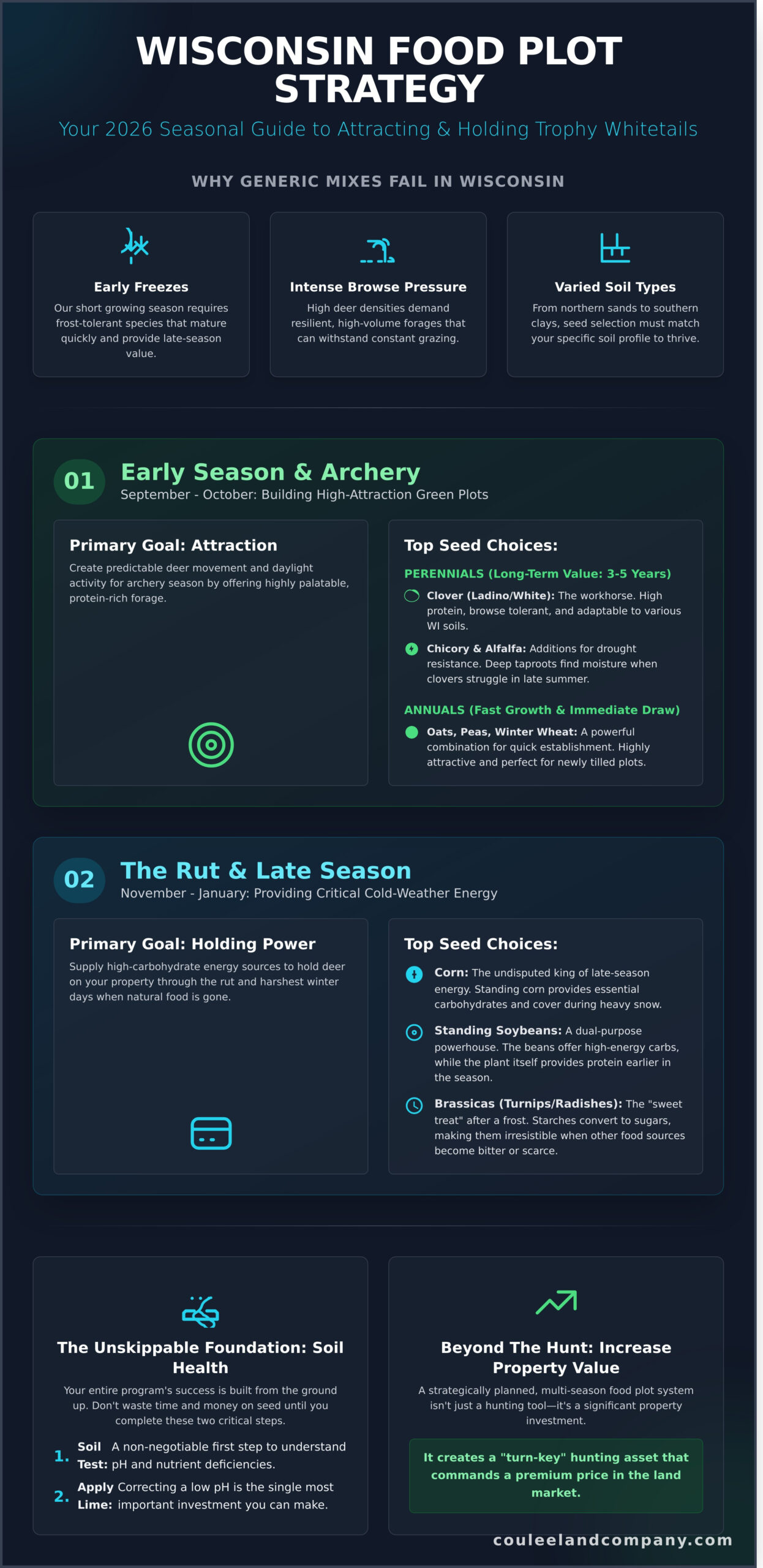
Why Wisconsin’s Landscape Demands a Custom Food Plot Strategy
Planting a successful food plot in Wisconsin is more than just scattering seed and hoping for rain. Our state presents a unique set of challenges-from brutal, snow-filled winters and early freezes to some of the highest deer densities and browse pressures in the country. Generic “northern blend” seed mixes often fail here because they don’t account for our specific conditions, from the sandy soils of the north to the rich loams of the southern Bluff Country.
For a practical look at how these elements come together, the following video offers some excellent insights:
A superior strategy involves creating a complete, year-round nutritional program that supports your herd from the summer antler-growing months through the stressful late winter. This is a fundamental aspect of modern land management. For those new to the concept, understanding what a food plot is and its role in enhancing wildlife capabilities is the critical first step. This requires a deep understanding of your specific property, starting from the ground up.
Understanding Your Soil: The Foundation of Success
Your soil is the bedrock of your entire food plot program. Before you buy a single seed, a simple soil test is non-negotiable. It reveals your soil’s pH and nutrient deficiencies, which vary dramatically across the state. In the sandy, often acidic soils of northern Wisconsin, you’ll need different amendments and seed varieties than in the rich, heavy loams of the southern agricultural zones. Correcting a low pH with lime is the single most important investment you can make; it unlocks the soil’s potential and allows your plot to thrive.
Matching Seed to Your Goals: Attraction vs. Nutrition
Not all food plots serve the same purpose, and your strategy must align with your hunting goals. The best food plot seed for Wisconsin land managers often comes in two categories:
- Attraction Plots: Typically planted with highly palatable greens like clover, chicory, and brassicas, these plots are designed to draw deer to specific locations during the early archery and gun seasons.
- Destination Plots: These are high-carbohydrate food sources like corn or standing soybeans that provide critical late-season energy, holding deer on your property when natural food is scarce.
A truly expert approach uses a combination of both, creating a property with superior holding power that trophy whitetail bucks have no reason to leave.
Early Season & Archery: Building High-Attraction Green Plots
For the serious Wisconsin hunter, the early archery season presents a golden opportunity. The key to capitalizing on this window, from late August through October, is creating food plots that are simply irresistible. The goal is to establish a pattern of predictable movement by offering highly palatable, protein-rich forages that draw deer from their summer bedding areas. These smaller, secluded “kill plots” are strategically placed to intercept deer during daylight hours. Successfully establishing these high-attraction plots is a cornerstone of a superior land management plan, aligning perfectly with the principles outlined in the DNR’s guide to Wisconsin’s Custom Food Plot Strategy.
Top Perennial Choices: Clover, Chicory & Alfalfa
When you demand long-term performance and resilience, perennials are the undisputed champions. A high-quality perennial blend can produce for three to five years with proper maintenance, standing up to consistent browse pressure. Ladino and white clovers are the workhorses of any perennial plot, as they are tolerant of Wisconsin’s diverse soil types and produce an incredible volume of protein-rich forage. To truly elevate your plot, blending in deep-rooted chicory or alfalfa is a professional-grade move. These additions dramatically increase drought resistance, ensuring your plot remains green and attractive even during dry late-summer periods, making it the best food plot seed for wisconsin land managers seeking multi-year value.
Best Annuals for Quick Growth: Oats, Peas & Winter Wheat
For landowners needing fast establishment and immediate drawing power, annuals are the perfect solution. If you’re breaking new ground or want to supplement a perennial plot, a fall-planted annual mix delivers exceptional results in the same season. Forage oats are like candy to deer in the early fall, and their high sugar content creates an attraction that is second to none. However, oats will typically die off after the first few hard frosts. By planting a blend of oats and forage peas, you provide both an irresistible carbohydrate source and a powerful protein attractant, keeping deer on your property and creating the perfect setup for that early season archery hunt.
The Rut & Late Season: Providing Critical Cold-Weather Energy
When the November gales sweep across the bluffs and the neighbors’ acorn flats are picked clean, a well-planned late-season food plot becomes the single most important factor for holding mature bucks on your property. The biological focus for whitetails shifts dramatically from protein for antler growth to high-energy carbohydrates and fats needed to survive a brutal Wisconsin winter. This is where your land management strategy truly pays dividends, creating a destination food source that becomes an absolute deer magnet during the gun season and late bow.
The Power of Brassicas: Turnips, Radishes & Rape
For many Wisconsin land managers, brassicas are the cornerstone of a successful late-season plot. This family of plants-including turnips, radishes, and rape-undergoes a chemical change after the first hard frosts, converting starches into sugars. This makes them incredibly palatable and a powerful draw for deer seeking a sweet, energy-packed meal. To ensure your brassicas reach their full potential, a proper soil foundation is non-negotiable. Getting a professional analysis through a resource like the University of Wisconsin’s guide on Soil Testing for Wisconsin Food Plots will provide the exact recommendations needed to maximize tonnage. Varieties like forage radishes and purple-top turnips are particularly effective, offering lush tops for early attraction and high-carbohydrate bulbs that deer will dig for even under heavy snow. The key is timing: planting in mid-to-late July allows for optimal growth before the first freeze.
Standing Grains for Severe Weather: Corn & Soybeans
For landowners with the acreage and equipment, standing grains represent the ultimate in late-season nutrition and are a key component of the best food plot seed for Wisconsin hunting properties. Standing corn is the undisputed king of winter energy. The carbohydrate-rich kernels provide a critical, high-calorie food source that stands tall above the snow, offering sustenance when everything else is buried. Similarly, standing soybeans, while providing excellent protein through their leaves in the summer, offer energy-dense pods that deer will hammer throughout the winter. While these plots demand a greater investment, the payoff is unmatched, creating a destination that pulls and holds deer from surrounding properties when the hunting pressure is at its peak.
Putting It All Together: A Sample Wisconsin Food Plot Plan
Selecting the right seed is only the first step. True success lies in creating a strategic, property-wide plan that provides a diversified portfolio of food sources. A thoughtful layout not only holds deer on your property from early fall through the harsh Wisconsin winter but also dictates their movement for predictable hunting opportunities. It’s how you transform a good property into a great one.
A critical component of this strategy is a simple rotation plan. Continuously planting the same annuals, like brassicas, in the same plot depletes specific nutrients and invites disease. By rotating a brassica plot with a nitrogen-fixing clover or soybean plot the following year, you naturally replenish the soil and break pest cycles, ensuring healthier and more attractive forages.
Example Plan for a 40-Acre Parcel
On a classic 40-acre parcel, the goal is to create a pattern of movement that favors the hunter. This involves establishing different plot types in strategic locations, always considering your access routes to avoid spooking deer on your way to the stand. Here is a proven layout:
- Central Destination Plot: In a secluded, central part of the property, plant a 1-acre destination plot of standing corn, soybeans, or a late-season brassica blend. This becomes the primary evening food source where deer feel secure.
- Staging ‘Kill’ Plots: Place two smaller, half-acre perennial plots of clover and chicory along established travel corridors between bedding areas and the main destination plot. These act as staging areas where bucks will often stop to browse before heading to the main course.
- Natural Funnels: Use the property’s natural terrain-creek bottoms, saddles in ridges, and pinch points between thick cover-to funnel deer directly to or past your staging plots.
This intelligent design, which carefully considers deer behavior and hunter access, is a hallmark of the most productive hunting properties in the state. Planning with this level of detail is what separates average results from a truly superior hunting experience.
Expert Tip: The Art of ‘Frost Seeding’ Clover
For an incredibly effective, low-effort method to establish or thicken your perennial clover plots, look no further than frost seeding. In late February or early March, broadcast your clover seed directly onto frozen ground, even over a thin layer of snow. The natural daily freeze-thaw cycle of late winter will create small cracks and fissures in the soil, effectively “planting” the seed for you. This technique achieves excellent seed-to-soil contact without any tilling, making it a powerful and cost-effective tool for any serious land manager using the best food plot seed for wisconsin perennials.
How Elite Food Plots Increase Your Property’s Value
Beyond the immediate satisfaction of a successful hunt, establishing high-quality food plots is one of the most significant investments you can make in your property. A well-managed tract with a network of thriving food plots is more than just land; it’s a ‘turn-key’ hunting paradise. This strategic development doesn’t just attract and hold trophy whitetails-it attracts serious buyers who are willing to pay a premium for a property that is proven and ready to hunt from day one.
These habitat improvements are a tangible demonstration of your property’s true wildlife potential. A lush, green plot of clover or a field of standing beans tells a story of thoughtful stewardship and a healthy deer herd. This work directly translates to a higher market value and a faster sale, transforming your passion for land management into a powerful financial asset.
The ‘Sweat Equity’ Return on Investment
Every hour spent on a tractor and every dollar invested in the best food plot seed for wisconsin is a direct deposit of ‘sweat equity’ into your land. We encourage landowners to keep detailed records-soil test results, lime and fertilizer applications, planting dates, and even trail camera histories. This documentation creates a proven track record of success that elevates your property above the rest. In a competitive market like the famed bluff country of Buffalo County, this level of detail can be the deciding factor for a discerning buyer.
Work With a Land Specialist Who Speaks Your Language
A generic realtor sees acres and square footage; we see pinch points, bedding areas, and the results of superior land management. At Coulee Land Company, we are hunters and land specialists first. We understand the unique value that a well-executed food plot strategy adds, and we know how to market these features to buyers who recognize their worth. Our expertise ensures you get the maximum return on your investment when you decide to sell your hunting land. Don’t trust your most valuable asset to someone who doesn’t speak your language. Partner with the experts at couleelandcompany.com.
Transform Your Land into a Whitetail Paradise
A successful whitetail strategy goes far beyond a single bag of seed. It requires a season-long approach, from providing lush, high-attraction greens for the early archery season to offering critical, high-energy food sources during the brutal Wisconsin winter. As we’ve outlined, a well-executed plan not only holds mature bucks but significantly enhances your property’s overall value and wildlife capabilities.
Ultimately, selecting the best food plot seed for Wisconsin is about implementing a strategic, year-round nutritional program that turns your parcel into a premier hunting destination. This is the level of habitat management that separates a good property from a legendary one-and it’s a distinction we understand intimately.
As Wisconsin’s Land & Property Sales Specialists, the team at Coulee Land Company has a proven track record of marketing and selling the most elite hunting parcels in the state. Our deep expertise in Bluff Country habitat management allows us to identify and showcase properties with true trophy potential. If you’re ready to acquire your own piece of whitetail heaven, start your search with the experts. View our premier Wisconsin hunting properties today.
Here’s to a successful season and a legacy built on superior land stewardship.
Frequently Asked Questions About Wisconsin Food Plots
What is the easiest food plot to plant in Wisconsin for a beginner?
For new land managers, a perennial clover plot is the superior choice. White clovers are incredibly resilient, tolerant of various soil conditions, and require minimal equipment to establish. They provide high-protein forage from early spring through fall, creating a consistent draw for your local herd. This simple, effective plot is a foundational step in enhancing your property’s wildlife capabilities and is a proven performer in our famed Bluff Country hunting grounds.
How much does it cost to plant one acre of food plot in Wisconsin?
The cost to establish a one-acre food plot in Wisconsin typically ranges from $200 to over $600. The final investment depends on key variables like the seed mix chosen, soil amendment requirements such as lime and fertilizer, and whether you need to rent equipment. A simple, no-till clover plot will be on the lower end, while a complex annual mix requiring extensive tillage will approach the higher estimate. Proper planning ensures a wise investment in your land.
When is the best time to plant food plots for deer in Wisconsin?
Wisconsin’s planting windows are dictated by forage type. For perennials like clover and alfalfa, a spring planting from late April to early June is ideal, allowing them to establish before summer stress. For critical fall hunt plots featuring brassicas, oats, and winter rye, the optimal time is late July through August. This timing ensures the plot reaches peak maturity and palatability just as the pre-rut and hunting season begins, maximizing attraction for trophy whitetails.
What can I plant in a shady food plot or in the woods?
Wooded plots present a unique challenge, but select forages can thrive with at least 4-5 hours of direct sunlight per day. White clovers are highly shade-tolerant and perform exceptionally well on logging roads or in small clearings. These low-light plots create secluded feeding areas that mature bucks often favor, adding a powerful strategic element to your hunting property. Proper soil preparation and liming remain essential for success in these locations.
Do I need a tractor to plant effective food plots?
While a tractor simplifies the process, it is not an absolute necessity for creating amazing food plots. Many successful land managers utilize ATVs with small implements like a disc or drag harrow. For smaller, remote “kill plots,” a no-till approach using only backpack sprayers, broadcast seeders, and hand tools can be incredibly effective. The key is proper site preparation and choosing a seed blend that matches your equipment capabilities.
What is ‘frost seeding’ and does it work in Wisconsin?
Frost seeding is a highly effective, low-effort technique that works exceptionally well across Wisconsin. It involves broadcasting seed, typically small seeds like clover, onto the ground during late winter (February-March). The natural freeze-thaw cycles of the soil work the seed into the ground, ensuring excellent seed-to-soil contact for germination in the spring. This is a superior method for overseeding existing plots or establishing new ones with minimal soil disturbance.
How do I keep deer from eating my food plot before it’s established?
Protecting a new plot from over-browsing is critical. For smaller plots, specialized electric fence systems or repellents like Milorganite can be effective deterrents. Another proven strategy is to include a fast-growing “nurse crop,” like oats or rye, in your mix. The deer will browse the nurse crop while the more desirable plants establish. Choosing the best food plot seed for Wisconsin often involves a diverse mix that can withstand this early pressure.