
A legacy isn’t built on a screen or in a volatile stock market; it’s forged in the soil of a world-class whitetail habitat. Many hunters and investors hesitate because they’re worried about the 1.32% effective property tax rate or the complexities of the new Truth in Planning legislation. However, the benefits of owning land in wisconsin have never been more apparent as 2025 farm real estate values reached an average of $6,420 per acre. You understand that true wealth is measured in the quiet of a November morning and the security of a tangible asset that your family will cherish for generations.
You likely feel that the dream of owning a private sanctuary is becoming more elusive as high-quality parcels command premium prices. I’ll show you why Wisconsin land remains a high-performance recreational vehicle that pays dividends in both trophy bucks and financial stability. This guide breaks down the 2026 market outlook, analyzes the impact of current CWD regulations on your management strategy, and identifies the regions where forest land values still offer an incredible entry point for the dedicated outdoorsman.
Key Takeaways
- Understand why high-quality acreage remains a resilient asset and a primary hedge against 2026 market volatility.
- Explore the lifestyle benefits of owning land in wisconsin, including the unparalleled freedom to manage your own world-class whitetail habitat.
- Learn how to identify hidden value in timber and wildlife travel corridors that general real estate agents often overlook.
- Discover the strategic advantages of securing a legacy property in the nation’s premier region for trophy class genetics.
- Master the complexities of rural zoning and easements to ensure your investment remains secure for generations.
Tangible Value: Why Wisconsin Land is a Resilient Investment in 2026
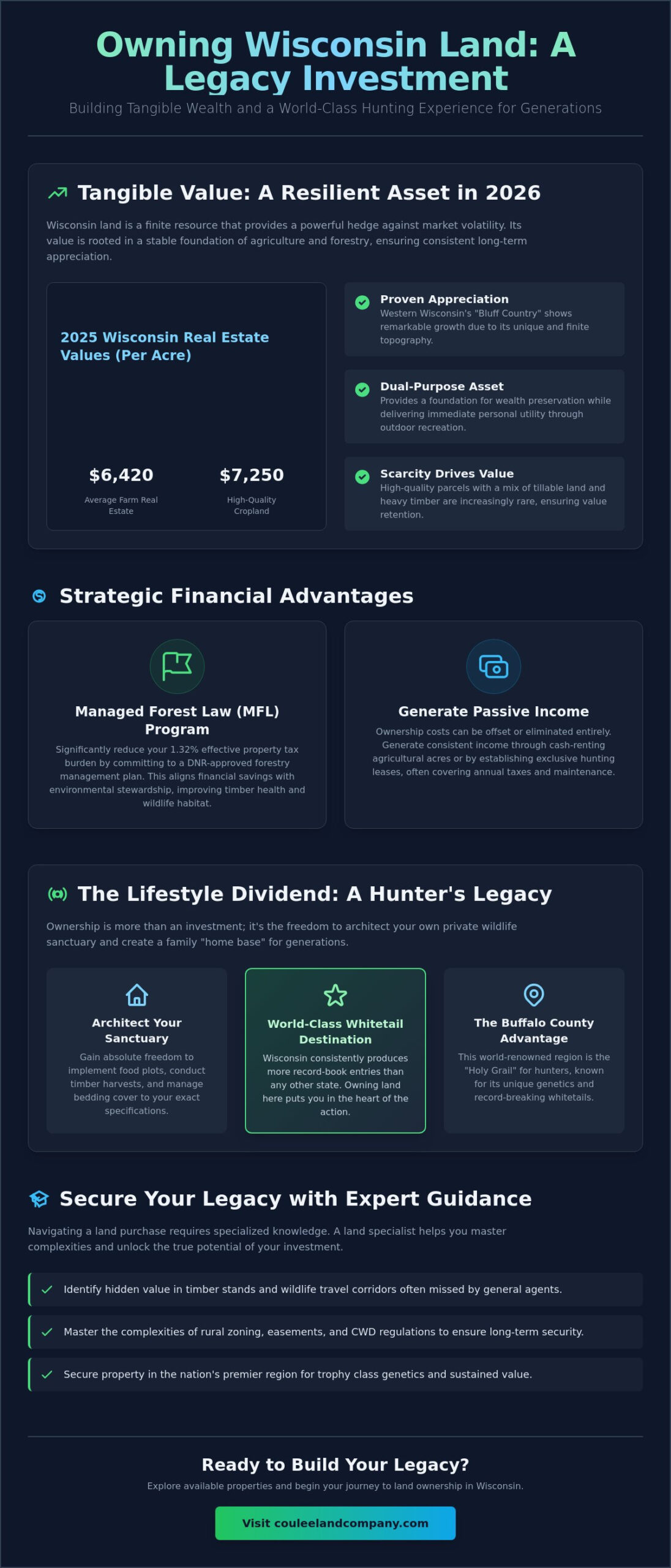
Wisconsin land isn’t just dirt; it’s a finite resource that continues to outperform volatile paper assets. In the 2026 economy, investors are searching for stability, and the benefits of owning land in wisconsin provide exactly that. High-quality parcels are increasingly rare, especially those with the right mix of tillable acreage and heavy timber. A recreational land investment is a dual-purpose asset that provides a tangible foundation for wealth preservation while delivering immediate personal utility through outdoor pursuits and property stewardship.
The resilience of these properties is rooted in the diversity of Wisconsin’s economy and land use, where agricultural and forestry sectors provide a solid floor for valuations. Even as other markets fluctuate, the demand for “dirt” remains constant. In 2025, Wisconsin farm real estate values averaged $6,420 per acre, representing a steady climb that rewards long-term holders. High-quality cropland reached an average of $7,250 per acre in that same period, proving that productive ground remains a cornerstone of a diversified portfolio.
To better understand the financial and personal dynamics of these properties, watch this helpful video:
One of the most powerful tools for a Wisconsin landowner is the Managed Forest Law (MFL) program. This initiative allows you to significantly reduce your property tax burden by committing to sound forestry practices. By following a DNR-approved management plan, you’re not just saving money; you’re actively improving the health of your timber and the quality of your hunting habitat. It’s a strategic move that aligns financial savvy with environmental stewardship.
Passive Income and Tax Incentives
Ownership costs don’t have to be a burden. You can generate consistent passive income through cash-renting agricultural acres or by establishing exclusive hunting leases. These income streams often cover your annual taxes and maintenance. If you’re curious about how these factors influence your property’s worth, you can explore current market valuations on our Sellers page. Various DNR conservation programs also offer financial support for those dedicated to preserving the natural landscape and improving wildlife corridors.
Long-Term Appreciation Trends
Western Wisconsin, particularly the famed “Bluff Country,” has shown remarkable growth over the last decade. The unique topography of the Driftless Region creates a “scarcity within a scarcity.” You can’t manufacture more limestone bluffs or deep coulees. This geographic exclusivity ensures that these properties maintain their value, even during broader real estate downturns. It’s a proven territory where record-breaking whitetails and steady appreciation go hand-in-hand, making it a premier choice for those looking to secure a legacy.
The Lifestyle Dividend: World-Class Hunting and Recreational Freedom
Owning land here is a badge of honor for the serious hunter. Wisconsin consistently produces more record-book entries than any other state, and having a deed to a piece of this ground puts you at the center of the action. Beyond the statistics, the true benefits of owning land in wisconsin lie in the absolute freedom to dictate your own outdoor experience. You aren’t just a guest on someone else’s property; you’re the architect of a private wildlife sanctuary.
This freedom extends to every facet of land use. Whether you’re carving out elaborate food plot systems or conducting selective timber harvests to improve bedding cover, you have the final say. While the latest agricultural land values show the financial strength of the region, the emotional returns of a family “home base” are immeasurable. It’s a place where you’ll teach the next generation how to read a track and wait for the right wind. You can browse our current hunting properties to see the caliber of Bluff Country land currently available for your legacy.
The Buffalo County Advantage
If you’re chasing the “Holy Grail” of whitetail hunting, you’re likely looking at Buffalo County. This specific geographic niche is world-renowned for its unique genetics and the sheer density of mature bucks. Our Buffalo County community page highlights why this area remains the gold standard for property buyers. For those ready to dive deep into the tactics required for this terrain, our guide on Buffalo County Wisconsin Deer Hunting offers expert-level insights into the local herd.
Stewardship and Habitat Management
There’s a profound satisfaction in transforming a raw parcel into a thriving ecosystem. Through strategic Timber Stand Improvement (TSI) and high-protein food plots, you can drastically increase the carrying capacity of your land. This isn’t just about hunting; it’s about stewardship. For practical tips on maximizing your acreage, our resource on Wisconsin Land Management for Wildlife provides a comprehensive landowner’s guide to habitat success. If you’re ready to start your journey, consider reaching out to a specialist who understands this dirt as well as you do.
Navigating Your Purchase: Why a Land Specialist is Essential
Purchasing raw acreage involves far more than signing a deed. It requires a deep dive into easements, mineral rights, and the specific rural zoning laws that can dictate your land’s future potential. A standard residential realtor often lacks the specialized knowledge to identify the “hidden value” of a property. They might see a stand of trees, while a land specialist sees thousands of dollars in mature walnut or a strategic thermal bedding thicket. To truly realize the benefits of owning land in wisconsin, you need a partner who understands the dirt as well as the market.
Our team, including experts like Mike Law and Bryan Lemke, consists of brokers who are active hunters and land managers. We don’t just push paper; we walk the ridges and valleys with you. We understand how Wisconsin’s landowner incentive programs can shift the financial outlook of a parcel, turning a simple purchase into a high-yield investment. This insider perspective ensures you aren’t just buying a view, but a functional, high-performance asset.
Due Diligence for Land Buyers
- Soil Quality and Drainage: We assess the ground’s capability to support diverse food plots or potential building sites, ensuring the land meets your long-term goals.
- Legal Access and Neighbors: Verifying deeded access and understanding the local neighbor dynamics is critical for maintaining a low-pressure hunting environment.
- Timber Evaluation: We evaluate the current timber value and future harvest potential, which acts as a significant component of your overall ROI.
Closing the Deal with Confidence
Negotiating a land deal requires a different set of metrics than residential sales. We don’t rely on cookie-cutter comps. Instead, we analyze soil productivity, timber volume, and wildlife record-book history to ensure you pay a fair price for the value provided. For a deeper look at the acquisition process, check out our sibling article, Hunting Land for Sale in Wisconsin: The Ultimate Buyer’s Guide. Don’t leave your legacy to chance; work with professionals who live and breathe the Wisconsin outdoors.
Secure Your Piece of the Driftless Legacy
The decision to acquire a legacy property is about more than just a financial hedge; it’s about claiming your place in the finest whitetail territory in the nation. We’ve explored how the Managed Forest Law and agricultural productivity provide a stable foundation for your investment, while the prestige of Buffalo County genetics offers a lifestyle dividend that no other region can match. Truly understanding the benefits of owning land in wisconsin requires a partner who knows every coulee and ridge. You’re not just buying dirt; you’re investing in a tangible asset that pays dividends in memories and market value.
Our team brings over 50 years of combined experience in Bluff Country to every transaction. We specialize in record-book whitetail properties and maintain deep roots in Western Wisconsin land management, ensuring your purchase is backed by decades of boots-on-the-ground expertise. You deserve a broker who values the land’s potential as much as you do. Take the first step toward securing your family’s future and establishing a home base for your outdoor traditions.
View Our Exclusive Wisconsin Land Listings and find the ground that will define your legacy for generations to come.
Frequently Asked Questions
Is owning land in Wisconsin a good investment in 2026?
Yes, Wisconsin land remains a premier investment because it’s a tangible asset with a proven track record of stability. In 2025, farm real estate values averaged $6,420 per acre, showing a steady climb from previous years. High demand for recreational properties and limited supply ensure that quality parcels maintain their value even when other markets fluctuate. It’s a reliable hedge against inflation that offers both financial growth and personal utility.
How much are property taxes on hunting land in Wisconsin?
Property taxes depend on the specific county and land classification, but the statewide average effective rate is approximately 1.32%. While the average annual bill for a median-valued home is about $3,818, recreational land often carries different assessment values. One of the major benefits of owning land in wisconsin is the ability to lower these costs through agricultural use or forestry programs, which can significantly reduce your annual tax burden.
What is the Managed Forest Law (MFL) and how do I apply?
The MFL is a state program that reduces property taxes for landowners who commit to sustainable forestry and wildlife habitat management. You apply by working with a DNR-certified plan writer to develop a management schedule for your timber. This program is essential for those looking to maximize the benefits of owning land in wisconsin, as it aligns financial tax savings with the long-term health of your hunting ground.
Can I build a cabin on recreational land in Wisconsin?
Building a cabin is generally permitted on most recreational parcels, but it’s subject to local zoning ordinances and specific land use classifications. You must check for any restrictions related to shoreland zoning or existing MFL contracts, which might limit where you can place a permanent structure. It’s also wise to review the Truth in Planning legislation to see how future municipal growth plans might impact your specific area.
How do I generate income from my Wisconsin land?
You can generate consistent passive income through agricultural cash rents, hunting leases, or selective timber harvests. With 2025 cropland values averaging $7,250 per acre, leasing tillable ground to local farmers is a common way to cover your taxes and maintenance. Additionally, some landowners participate in conservation programs that provide financial incentives for habitat restoration, turning their property into a self-sustaining asset that pays for itself over time.
What is the difference between a land specialist and a regular real estate agent?
A land specialist understands soil types, timber value, and wildlife biology, whereas a regular agent typically focuses on residential square footage and school districts. Standard realtors often overlook critical details like mineral rights, deeded access issues, or how a specific coulee influences deer movement. Working with a specialist ensures you’re evaluating a property’s true potential for both trophy hunting and long-term financial appreciation.